WordPress Updates: A Safe Checklist
WordPress updates break sites when they run in the wrong order. A checklist to update WordPress safely: backup, staging, one change at a time.
By Matthew Zhao · Editor, Hosted EZ
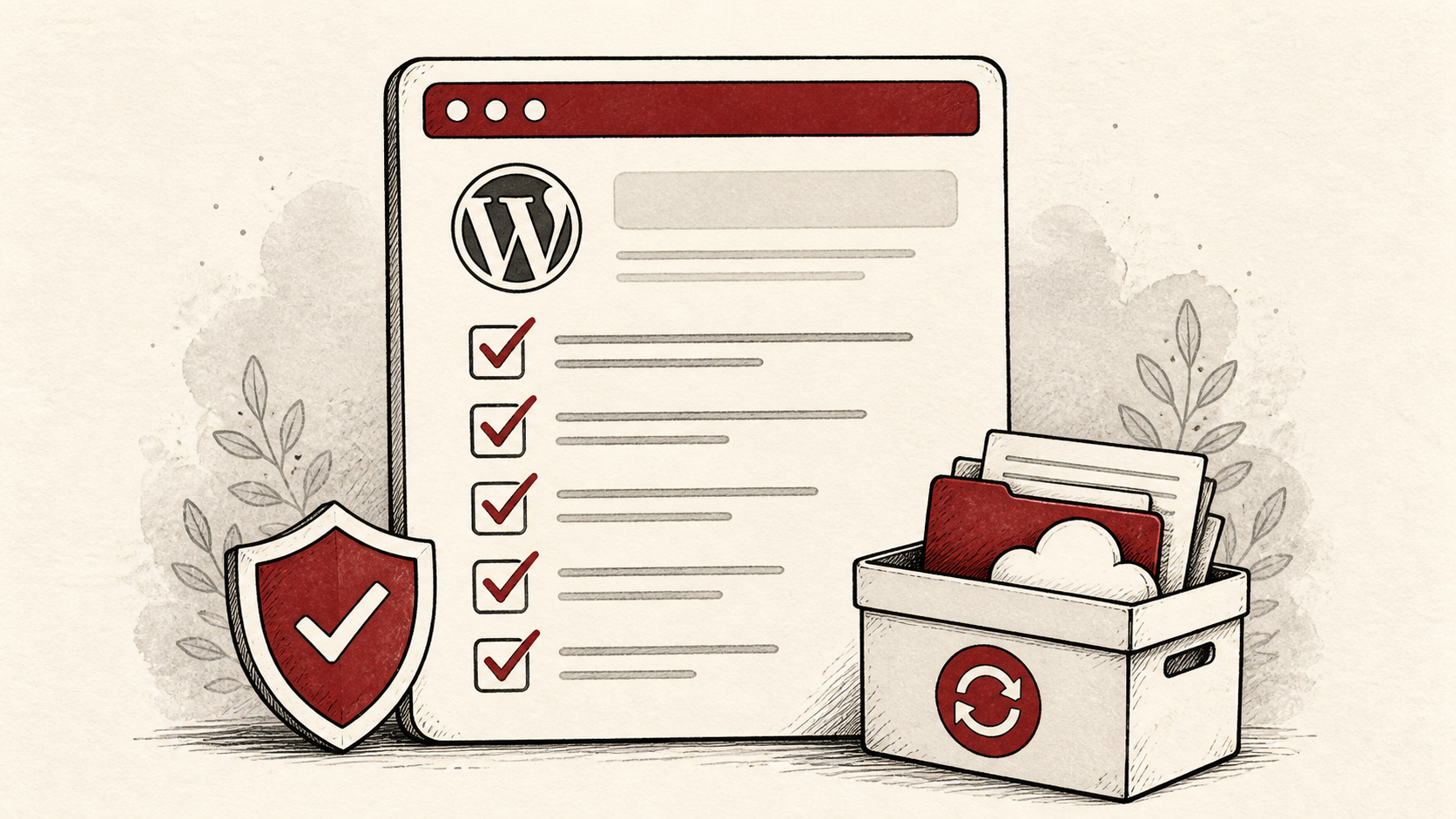
WordPress updates are routine right up until one takes the site down, and the difference is almost always order of operations. Update WordPress safely by doing the boring parts first: verify a backup, stage anything risky, then apply one change at a time. Skipping updates is riskier than running them — outdated plugins are the classic way sites get hacked.
This guide focuses on the checks a small-site owner can make safely, and points out where a host or developer should take over. Read how to choose a web host if you are still picking a provider, and how to migrate hosting without downtime before changing live infrastructure.
Start with a WordPress backup you can restore
Verify a backup before updating a plugin, theme, PHP version, or core. Verified means you know it exists, know it is recent, and know how to restore it — a backup nobody has tested is a hope, not a plan. Our WordPress backup strategy guide covers what to keep and where.
Make a short note of current versions — core, the theme, and the plugins due for updates — and the time. You want enough detail to retrace the work if something misbehaves days later.
A safe order for WordPress updates
Update one thing at a time and load the site between each: plugins first, one by one, then the theme, then core. Use a WordPress staging site for updates that touch checkout, membership, forms, or a heavily customized theme — the rollback there is faster than explaining a broken production site.
Check the public site and the admin area after each step, in a private browser window. A page that looks fine while logged out can still fail for an editor.
Test the result like a visitor
Read the error log before rolling anything back. The first useful line often points to the plugin, theme, memory limit, or PHP version mismatch behind the failure.
Test the normal path first, then the part with the most consequence. For a store, that is checkout. For a form, it is receiving the email. A test should answer one question rather than produce a vague impression.
When to stop and ask for help
Stop when an update wants a newer PHP or database version than your plan provides — that is a hosting conversation, not a click. Send support the domain, the versions involved, UTC time, and the exact error. Never include passwords.
WordPress's server requirements lists what current releases expect from the server. Check it before a major core update, then return to the small, reversible next step.
Make it a WordPress maintenance habit
Put updates on a schedule — monthly is enough for most small sites, with security releases applied as they appear. WordPress maintenance done on a calendar is short; done only after a compromise, it is a weekend. A dated note of each run turns the next incident into a lookup instead of an investigation.
Decide what updates itself. WordPress applies minor core security releases automatically by default in 2026, and the plugins screen can switch on per-plugin auto-updates. That is a reasonable setting for small, low-risk plugins; keep manual control over anything that touches checkout, membership, or the theme, where you want a backup and a test around every change.
Keep the change auditable
Keep a short record per run: versions before, versions after, the date, and the result of the test. A few months later, it tells you why a plugin is pinned at an old version on purpose.
Do not confuse the updates screen with evidence from the live site. The dashboard can report success while a cached page still serves the broken version. Test from outside the account, in a private window where a cached answer cannot mislead you.
If you hand updates to someone else, give them the record rather than a conclusion. "The update broke something" is hard to investigate. "Checkout failed after this plugin moved from this version to that one" gives the next person a useful starting point.
One last check
Before closing the run, repeat the action that matters most on your site — a purchase, a form submission, a login — through the ordinary path a visitor would use. A quiet confirmation now is much easier than discovering the missed detail during a launch.
Leave a useful handoff
Save the version list and results with the date. When WordPress updates land next month, whoever runs them starts from a known-good state instead of guesswork.
Bottom line
WordPress updates go wrong in predictable ways, which is why a checklist beats improvisation: verified backup, staging for the risky ones, one change at a time, test where it matters. Update WordPress safely this way and the whole job stays boring — which is the goal.
Frequently asked questions
Should I run all WordPress updates at once?
No. Apply one update at a time and test between each. A batch of ten updates that breaks the site leaves you ten suspects; one at a time leaves you one.
Is it safe to update plugins automatically?
For minor plugins, yes — the risk of running a known-vulnerable version usually outweighs the risk of a bad update. For the plugins your revenue depends on, no: apply those by hand behind a fresh backup, so a failure has a same-day rollback instead of a surprise discovery.
What information should I give hosting support?
Give the domain, the versions involved, UTC time, exact error text, and steps already tried. That is usually enough for support to find the relevant logs.
Do I need a backup before every update?
Yes. Verify a recent backup before edits that affect files, the database, or software versions — and every update is one of those.
About the author
Matthew Zhao
Matthew has spent his career running production server fleets — tens of thousands of machines' worth. He writes about hosting the way he wishes someone had explained it to him: plainly.
About Hosted EZ →Get the next guide in your inbox
One email when we publish something worth your time. No spam, unsubscribe whenever.