WordPress Hosting Requirements in 2026
WordPress hosting requirements for 2026: the PHP version, database, memory, and HTTPS baseline to check before you buy or renew a plan.
By Matthew Zhao · Editor, Hosted EZ
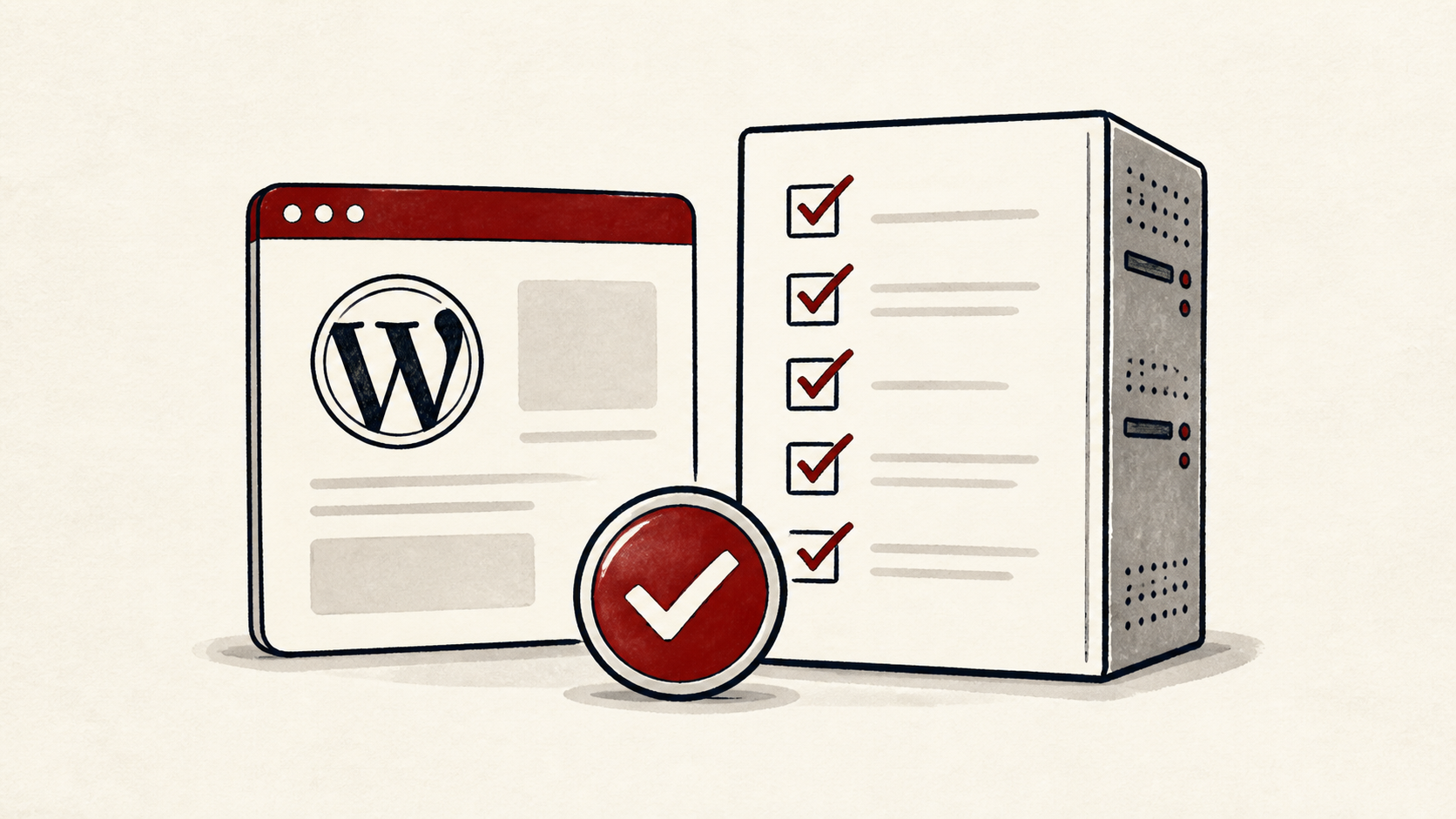
WordPress hosting requirements are short, which is why they are easy to skim past: a current PHP version, a MySQL or MariaDB database, and HTTPS. Nearly every plan sold in 2026 clears that bar on paper. The useful work is checking what your site actually needs — memory, storage, and an update policy — before you buy or renew, and this guide walks through it.
This guide focuses on what a small-site owner can verify without a support ticket. Read how to choose a web host for the broader decision, and how to migrate hosting without downtime if the answer turns out to be a new provider.
The baseline WordPress hosting requirements
The official WordPress requirements are deliberately modest: a supported PHP release, a supported MySQL or MariaDB release, and HTTPS. Treat them as the floor, not the target — the oldest allowed versions run slower and lose security support sooner.
Make a short note of what your current plan provides: PHP version, database version, memory limit, and storage. That inventory is what you compare plans against, not the marketing page.
Check the PHP version before anything else
The PHP release your host offers matters more than most advertised features, because it decides security patches and page speed at once. Any plan worth buying lets you choose the version per site from the control panel. If a host's newest offering is a release that has already lost support, that tells you how the rest of the platform is maintained.
Use a staging copy to test a version switch before relying on it. If a DNS change is part of a larger move, note the TTL and allow the old answer time to expire before judging the result.
Test a plan against your site, not the spec sheet
Requirements pages describe the minimum to run WordPress, not to run your WordPress. A site with an online store, a page builder, and thirty plugins needs more memory and CPU than a blog with five. That gap is where the cheapest WordPress hosting disappoints: it meets the requirements and still struggles under your actual plugin load. If you are weighing a generic plan against a tuned one, see WordPress hosting vs web hosting.
Test the normal path first, then the part with the most consequence. For a store, that is checkout under real traffic. A test should answer one question rather than produce a vague impression.
When to stop and ask for help
Stop when a requirement is outside your control, such as the database version on a shared plan. Ask support directly which PHP and database versions the plan runs and when they update them. A vague answer is an answer.
The canonical list is WordPress's server requirements — short, current, and free of marketing. Use it to understand the terms, then compare it against what your host actually provides.
A sensible maintenance habit
Revisit the list once a year, at renewal. WordPress hosting requirements creep upward as PHP releases retire, and a plan that qualified three years ago may now be the thing holding your site back. A dated note of what you checked turns next year's renewal into a lookup instead of an investigation.
Keep the change auditable
When you change plans or versions, keep a short before-and-after record: the PHP and database versions you found, the values you moved to, the time, and the result of the test. A few months later, it tells you why a setting has an unusual value.
Do not confuse the plan's spec sheet with evidence from the live site. A dashboard can claim a current PHP while an individual site stays pinned to an older release. Verify from the site itself — the Site Health screen in the WordPress admin reports what is actually running.
If you hand the comparison to someone else, give them the inventory rather than a conclusion. "This host is slow" is hard to act on. "This plan runs an unsupported PHP release and caps memory below our plugin load" is a decision.
One last check
Before you commit to a plan, confirm the requirements you care about appear in writing — on the plan page or in a support reply — rather than in a sales chat. If the promise is not written down, treat it as absent.
Leave a useful handoff
Save the inventory and the plan you chose with the date. When the next renewal or migration comes, you should be able to see what the site needed without reconstructing the research.
Bottom line
WordPress hosting requirements are a floor: current PHP, a supported database, HTTPS, and enough memory for your real plugin load. Check them against the plan in writing, verify them from Site Health after you move, and revisit the list each year.
Frequently asked questions
Should I upgrade PHP and WordPress at the same time?
No. Change one at a time — update WordPress on the current PHP release first, then switch PHP — and keep the previous value until you know the result is stable.
What information should I give hosting support?
Give the domain, exact URL or service, UTC time, error text, and steps already tried. That is usually enough for support to find the relevant logs.
Should I keep a backup before changing PHP or hosting plans?
Yes. Download or verify a recent backup before changes that touch files, the database, or software versions — a version switch is exactly that kind of change.
About the author
Matthew Zhao
Matthew has spent his career running production server fleets — tens of thousands of machines' worth. He writes about hosting the way he wishes someone had explained it to him: plainly.
About Hosted EZ →Get the next guide in your inbox
One email when we publish something worth your time. No spam, unsubscribe whenever.