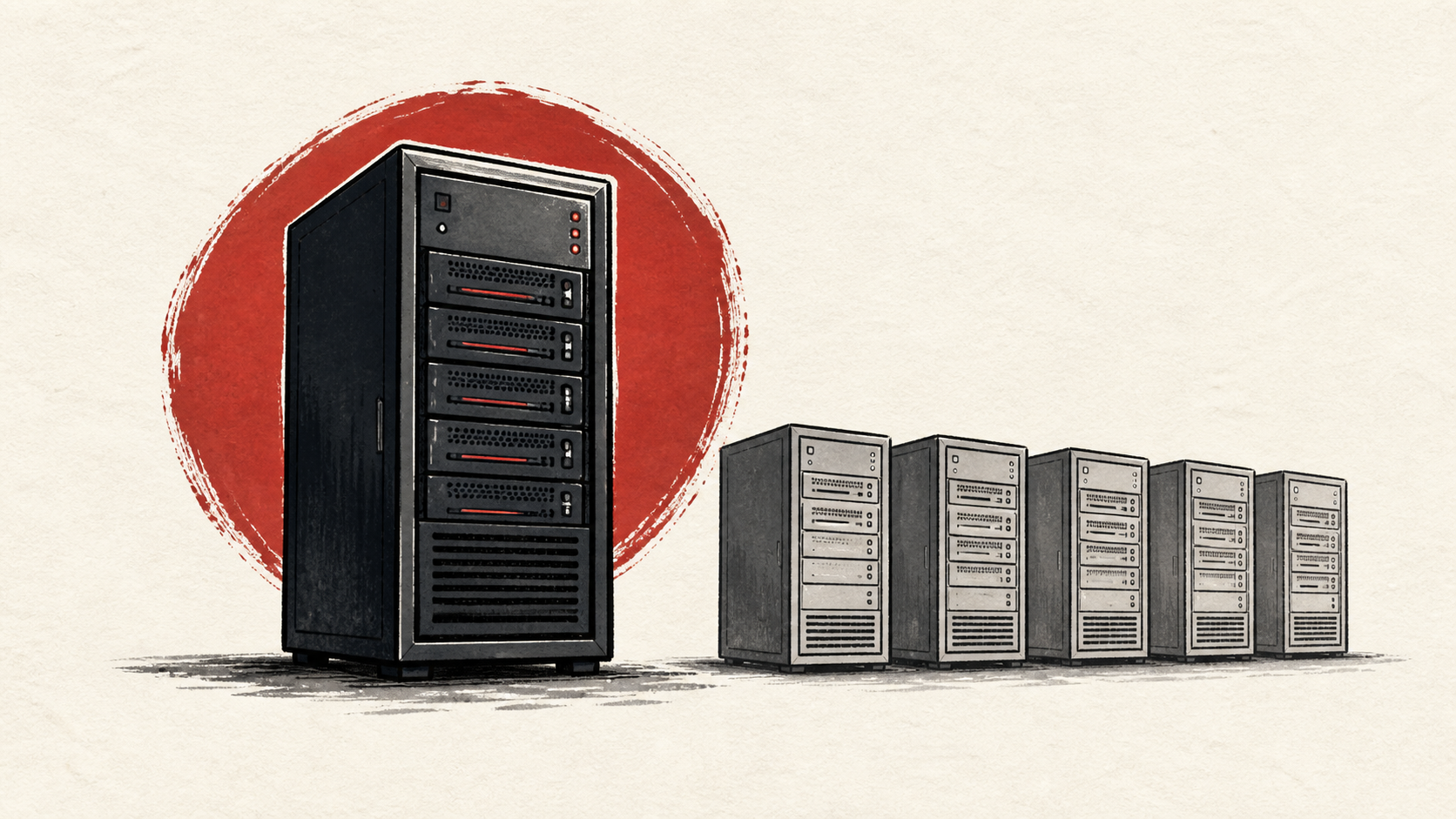
Serverless vs VPS for a Small Web App
Serverless vs VPS for a small web app: how billing, scaling, and maintenance chores differ, and a plain rule for choosing between them.
By Matthew Zhao · Editor, Hosted EZ
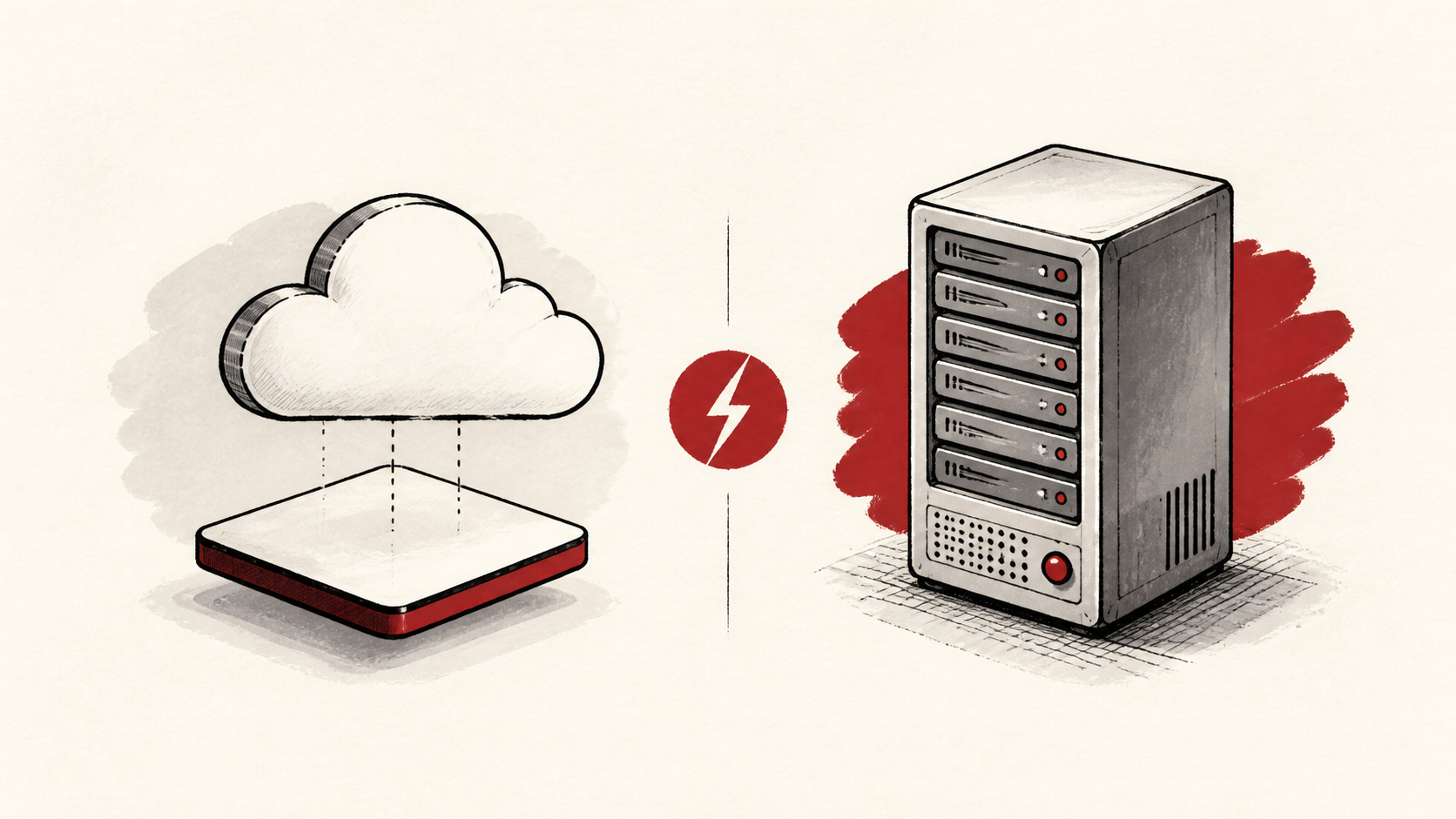
Serverless vs VPS is really a question about who owns the chores. With VPS hosting you rent a fixed virtual machine and manage everything on it; with serverless hosting you upload code, pay per request, and the platform runs it. This guide lays out how the two differ on billing, scaling, and maintenance for a small web app, and ends with a plain rule for choosing.
Read how to choose a web host if you are still picking the broader setup, and our guide to migrating hosts without downtime before changing live infrastructure.
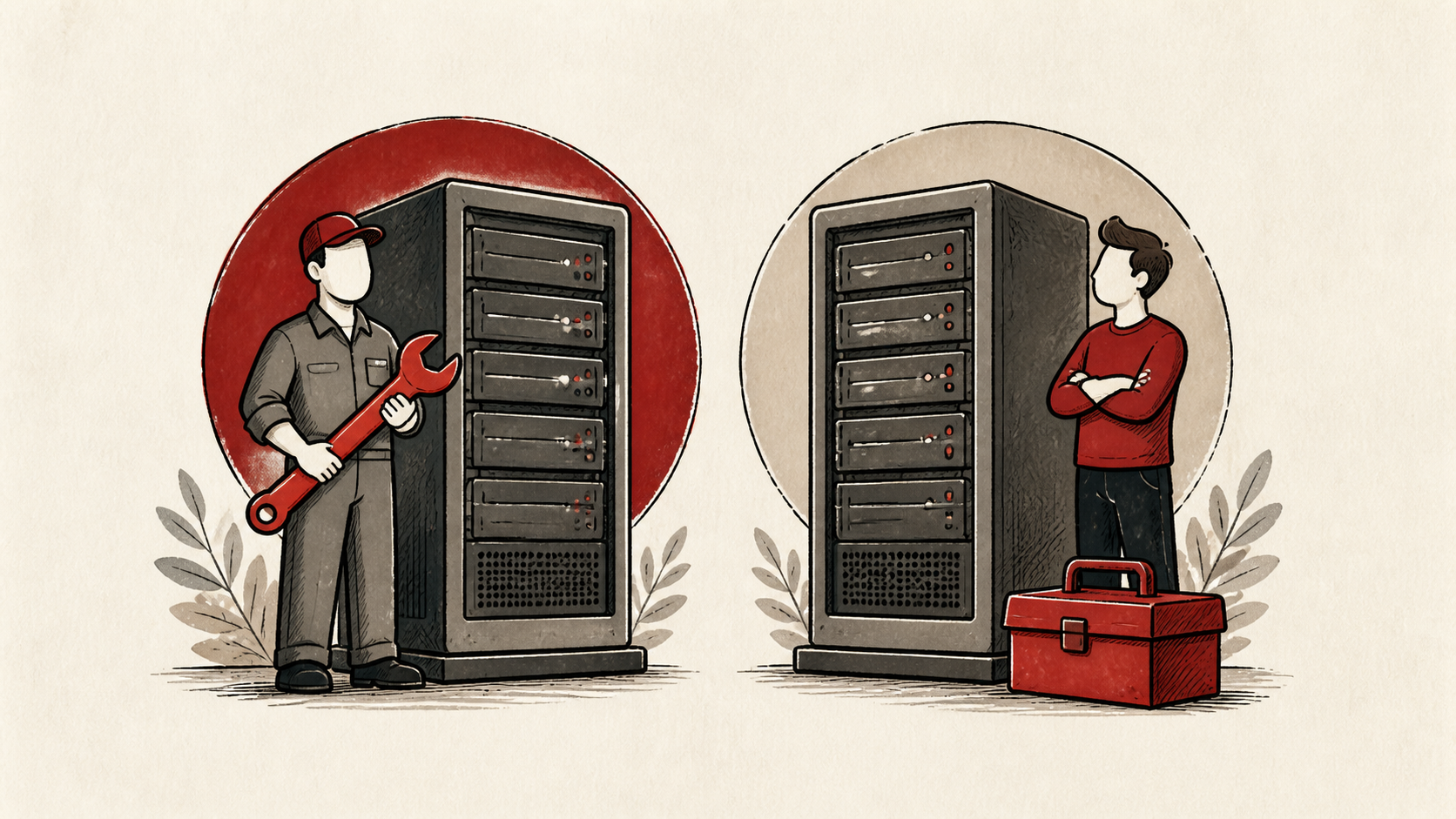
The responsibility boundary
With a VPS, the operating system, updates, web server, and firewall are yours — control and chores arrive together. Serverless removes the machine entirely: you own the code, the platform owns everything underneath. New to the VPS side? Our VPS hosting explainer covers the basics.
Be honest about which chores you actually want. "I could administer a server" and "I will patch it on a Tuesday night in November" are different claims.
Serverless vs VPS: match the platform to the bottleneck
Match the choice to the first bottleneck you expect. Steady traffic and a relational database favor a VPS: one fixed bill, everything in one place. Spiky or occasional traffic favors serverless: you pay nothing while nothing runs. Adopting either without knowing your bottleneck is an expensive way to postpone the decision.
Watch the shape of your app, too. Long-running jobs, WebSockets, and heavy background work fit a VPS naturally; request-and-response APIs fit serverless.
Read the limits before you commit
On VPS hosting, CPU, memory, storage, and transfer set the ceiling. On serverless, per-request time limits, memory caps, and cold starts do. Two plans with the same headline price do not behave the same way, and the limits are where small web app hosting decisions actually get made.
A cold start is the pause while the platform spins your code up after idle time — often too short to notice, sometimes long enough that the first visitor feels it. For an internal tool it is irrelevant; for a login or checkout endpoint it is a real cost. Databases are the other quiet limit: functions can open connections faster than a small database accepts them, so check whether the platform pools connections or the database offers an HTTP interface.
Test the path with the most consequence before going live — the slowest endpoint, the database-heavy page. A test should answer one question rather than produce a vague impression.
When to stop and ask for help
Stop when the next action could overwrite data, change production traffic, or remove access to the account. Send support the domain, time in UTC, exact error, and the changes you made, but never private keys, passwords, or payment information.
Cloudflare's cloud-server explainer has useful background on the server models both options are built on. Use it to understand the terms, then return to the small, reversible next step.
A sensible maintenance habit
Whichever you choose, keep a dated note of the configuration: instance size or function memory, region, and the environment variables that matter. Hosting problems repeat because nobody remembers why a setting has the value it has.
Keep the change auditable
When you change a plan, an instance size, or a function's limits, record the old value, the time, and the result of the test. Serverless platforms in particular make changes feel weightless, which is exactly how configurations drift.
Do not confuse the deploy log with the live app. A green deployment is not a fast endpoint — test from outside, the way a user would reach it.
One last check
Before you commit either way, run your app's real workload for a day, not a hello-world. Cold starts, database connections, and background jobs are where serverless vs VPS stops being theoretical.
Leave a useful handoff
Save the decision and the numbers behind it. When traffic grows and someone revisits the choice, the note explains what the constraints were, not just what was chosen.
Bottom line
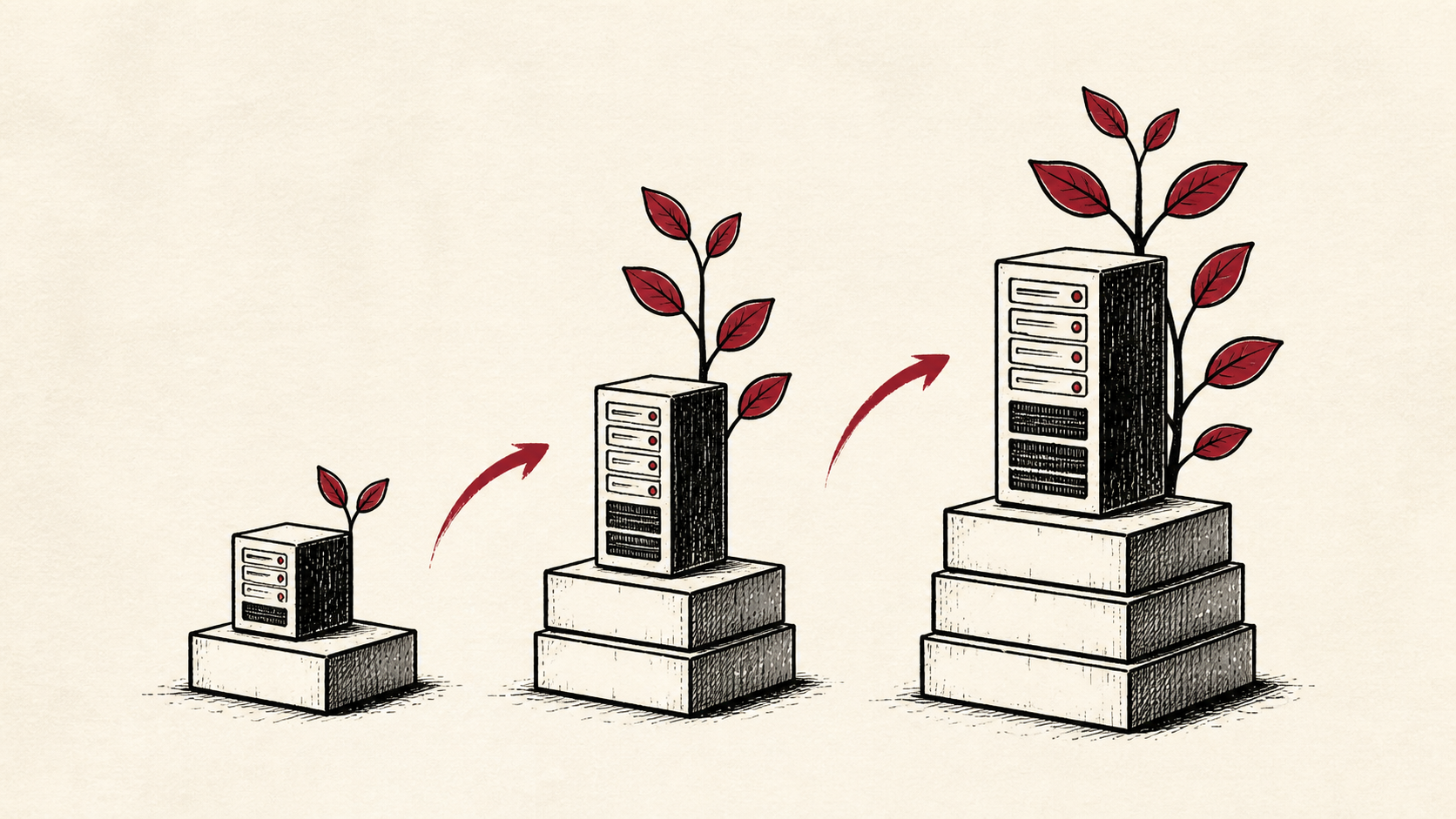
The serverless vs VPS call comes down to chores and traffic shape. For a small web app in 2026, the honest default is a small VPS if you want one predictable bill and full control, and serverless if your traffic is bursty and you have no appetite for server maintenance. Start small either way — both are easy to leave.
Frequently asked questions
Is serverless hosting cheaper than a VPS?
For low or bursty traffic, usually — you pay nothing when nothing runs. For steady traffic, a small VPS in the broad range of $5 to $20 per month is often cheaper and far easier to predict.
Can I run part of my app serverless and keep the rest on a VPS?
Yes, and it is the safest migration path. Move one route or one scheduled job, test it, and keep the VPS running until you know the result is stable.
What should I give support when something breaks?
The domain, exact URL or endpoint, UTC time, error text, and steps already tried. That is usually enough for support to find the relevant logs.
Should I keep a backup before switching?
Yes. Export the database and configuration before moving workloads in either direction — the migration path assumes you can step back.
Are containers a middle ground?
Yes. Container platforms sit between the two models: you package the app, the platform runs and scales it, and you skip operating-system chores without taking on per-request time limits. They suit a small web app that has outgrown serverless constraints but does not justify a full server. Pricing in 2026 typically lands between the two as well, broadly in small-VPS territory.
About the author
Matthew Zhao
Matthew has spent his career running production server fleets — tens of thousands of machines' worth. He writes about hosting the way he wishes someone had explained it to him: plainly.
About Hosted EZ →Get the next guide in your inbox
One email when we publish something worth your time. No spam, unsubscribe whenever.